Whether it’s keeping a phone charged to run a business, powering a sewing machine through the festival rush or cooking a family meal without smoke, 625 MOPO customers told us how affordable, reliable energy has changed their lives.
MOPO is scaling rapidly. We have now delivered 48 million battery rentals across the continent, and monthly rentals have grown from 150,000 in 2023 to 1.8 million today. To understand what this means for our customers, an independent survey asked 625 of them in Liberia, Sierra Leone and the Democratic Republic of Congo about life with MOPO. More than nine in ten said their quality of life had improved. We looked at the data to find out why.
Staying connected
Having charged devices and being able to charge them at home were among the top reasons customers said their quality of life improved. The transformative effect for our customers of having their phone on and being able to charge it at home cannot be overstated. MOPO has become so essential to daily life that more than half (56%) of our customers said they use their MOPO battery for over 12 hours a day.
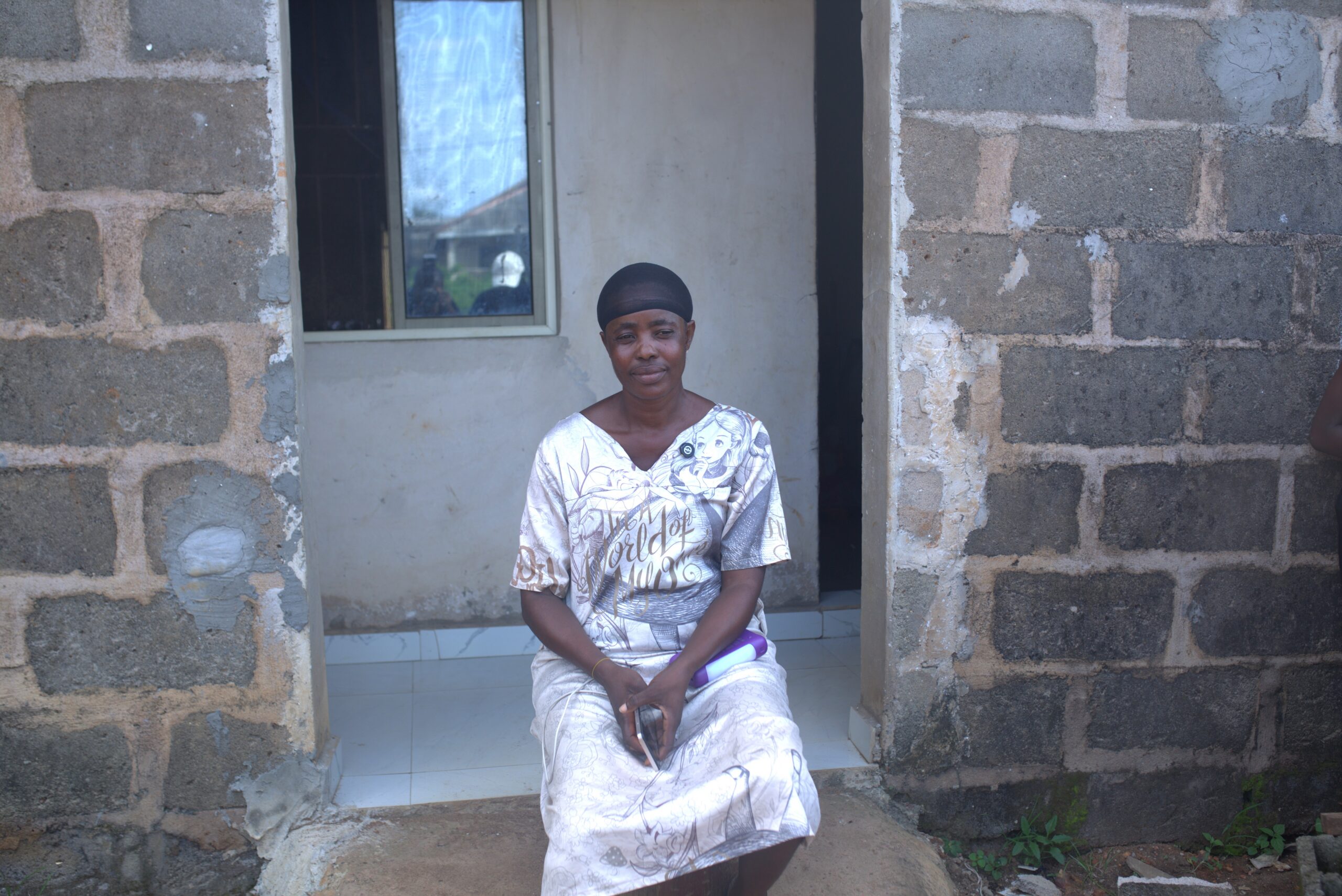
For one of our customers, Balikis Rufai, a market seller in Epe, just outside Lagos, a fully charged phone lets her keep her business running. Her neighbourhood has had no grid electricity for more than a year. “My phone is my bank,” she says. “It’s what I use for transactions.” Now she rents a MOPO50 from her local hub, paying in cash with no deposit and no contract. “I need to know the money that is coming in,” she says. “If my phone is off, I can’t do it.”
More power means more income
Among customers who use MOPO to earn a living, 95% say their income has gone up and 96% say their quality of life has improved, mostly because their businesses are more productive. In the DRC, every business customer reported higher income. The benefits also extended to customers who don’t use MOPO for business, with many reporting increased income and productivity.
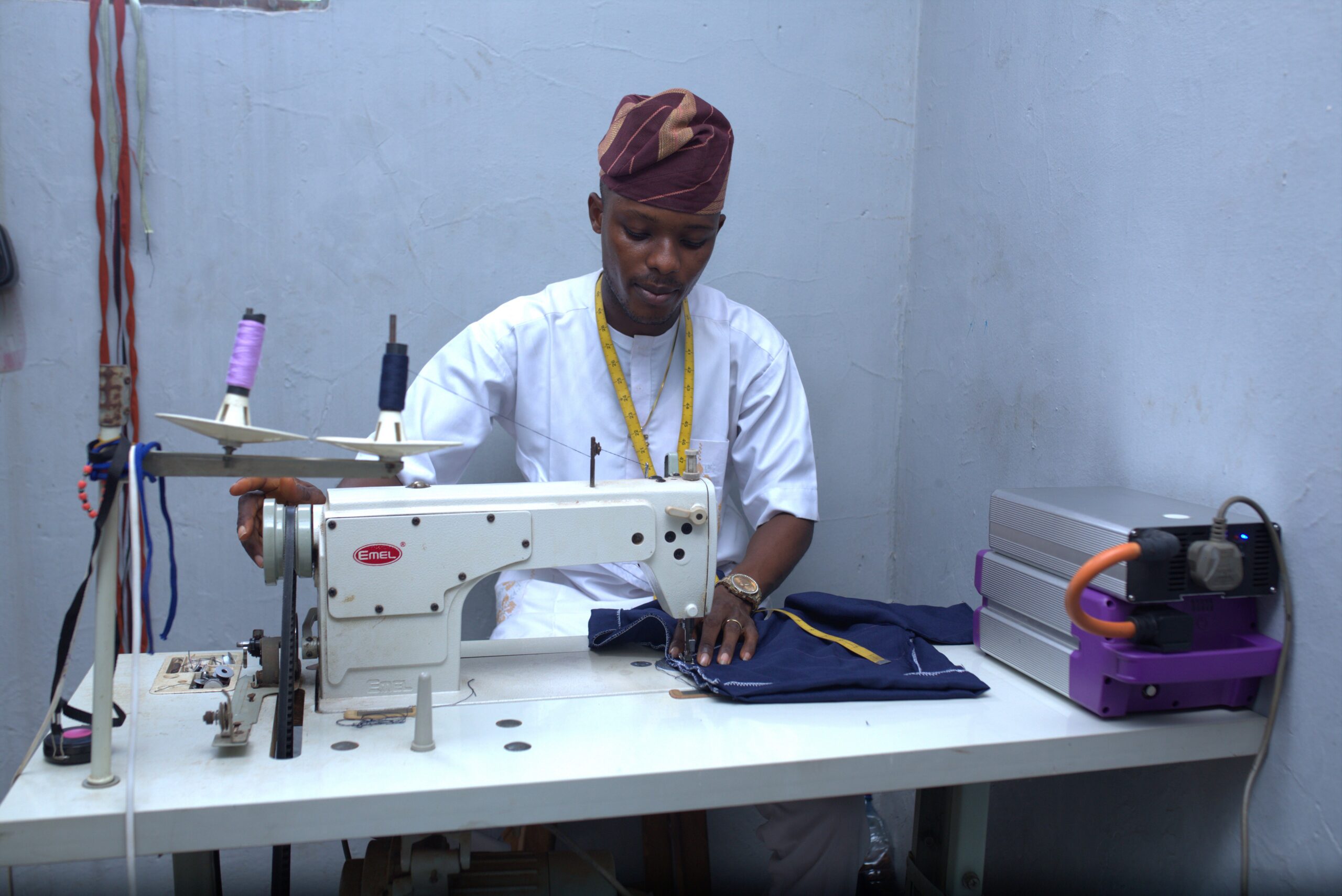
Balogun Adedayo runs Dignity Fashion Designs, a tailoring shop in Nigeria. With no grid electricity, he used to power his sewing machine with a petrol generator, but rising fuel prices and generator repair costs ate into his earnings. Now he rents a MOPOMax and he’s able to keep working through the rush before festivals and public holidays. “It made my work faster, easier and neat,” he says.
MOPO serves customers that other solutions can’t reach
MOPO operates entirely in UN Least Developed Countries or World Bank Fragile and Conflict-Affected Countries. Our commercial model works in the hardest-to-reach places where there are few other solutions available. In these places, many households can’t afford the upfront deposit that other energy models require. MOPO’s model allows customers to rent by the day or by the hour, removing this financial barrier and allowing them access to energy — 94% of customers said they had no access to a service like MOPO before, and 80% say they couldn’t easily find a good alternative.
Clean energy means better health
Over one in three customers say the air quality in their home has improved. MOPO batteries replace kerosene lamps and fume-belching generators, and they often power electric cooking in place of charcoal. The health burden of charcoal falls hardest on women, who on average spend hours tending cooking fires which exposes them to smoke.
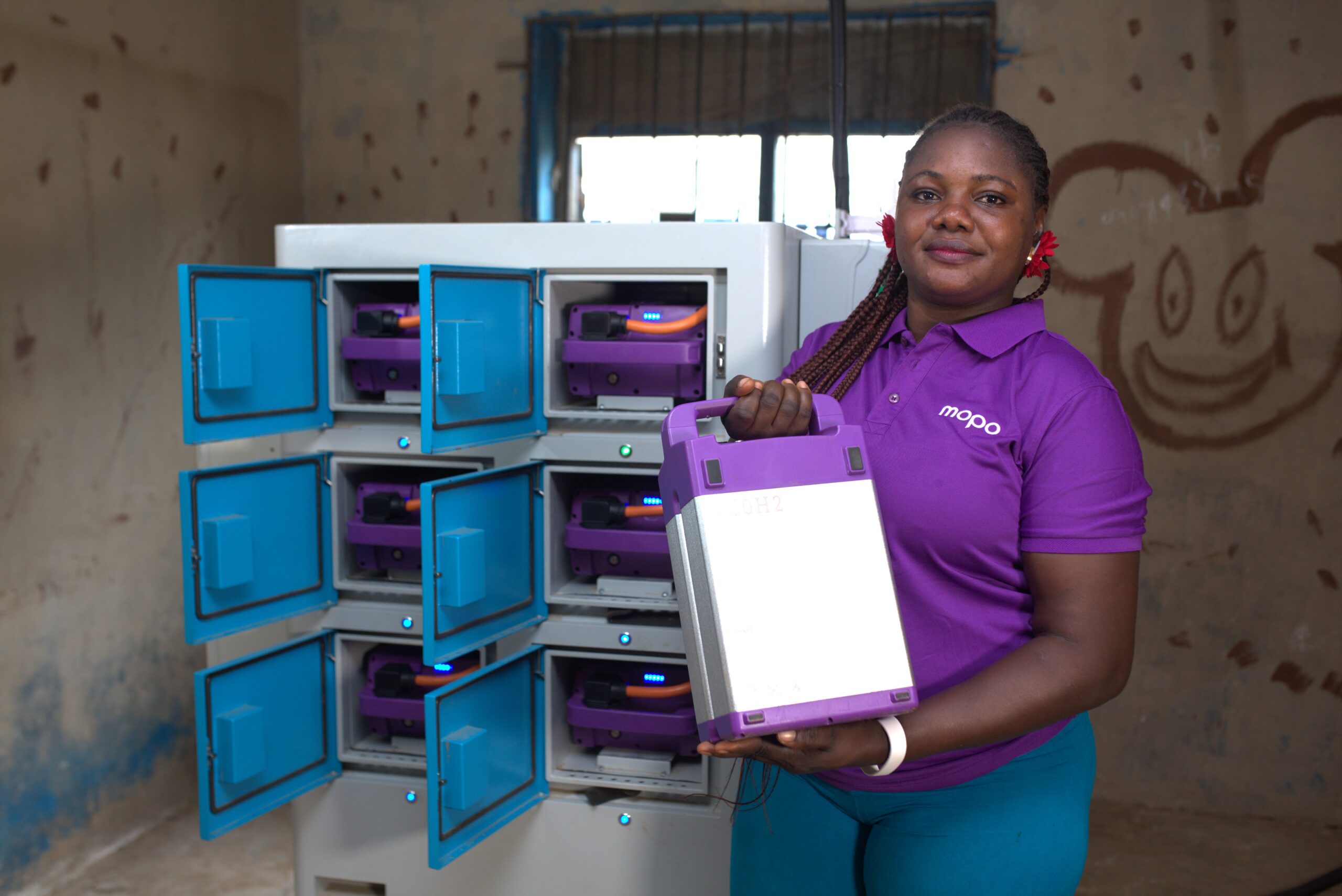
One customer, Jenneh Flomo in Liberia, switched from charcoal to an electric cooker powered by a MOPOMax, cutting out the smoke that used to come with cooking. With the time and money she saved, she bought a fridge, powered it with her MOPOMax and started selling cold drinks to her neighbours. One battery gave her better health and a new income.
Our mission and vision
From keeping phones charged to powering businesses and cleaner homes, this survey shows what affordable energy makes possible: customers accessing power with the money in their pocket and climbing the energy ladder as their needs and incomes grow, in places that few other solutions reach.